The Power of a Well-Fitted Suit
A suit isn’t just an outfit; it’s a statement. It’s an investment in your personal brand, a confidence booster, and a sartorial secret weapon. But just like a bespoke tailored garment, the perfect suit isn’t one-size-fits-all. Understanding your body type is the first, crucial step in selecting a suit that enhances your best features and creates a polished, sophisticated silhouette. Forget ill-fitting, off-the-rack regrets. This comprehensive guide will empower you to walk into any suiting store or tailor with the knowledge to choose a suit that looks like it was made just for you.
1. The Athletic Build Broad Shoulders, Tapered Waist
Characterized by broad shoulders, a well-defined chest, and a narrower waist and hips, the athletic build is often seen as ideal for suiting. However, it’s easy to make mistakes that can hide your physique rather than highlight it.
Key Considerations:
-
Jacket Fit: Look for jackets with a subtle taper at the waist to accentuate your V-shape. A single-breasted, two-button jacket is often the most flattering. Avoid overly padded shoulders, as your natural build already provides ample structure. The shoulders of the jacket should sit precisely on your natural shoulder line, not extending past it.
-
Lapels: Opt for medium-width lapels. Super skinny lapels can look disproportionate, while overly wide lapels can add unnecessary bulk.
-
Trousers: A flat-front, slim-fit trouser that tapers gently down to the ankle is ideal. Avoid pleated trousers, which can add bulk to your hips. The break of the trousers (where they meet your shoes) should be minimal or no break for a modern, clean look.
-
Fabric: Versatile fabrics like worsted wool or flannel work well. For a more relaxed, summery option, consider linen or cotton blends.

2. The Slim or Lean Build :Tall and Slender
Men with a slim or lean build typically have narrower shoulders, a straight torso, and minimal body fat. The goal here is to add a subtle impression of breadth and structure without overwhelming the frame.
You should Consider This:
-
Jacket Fit: A slim-fit or modern-fit jacket is your best friend. Look for natural shoulder padding to add a touch of definition to your frame. A two-button jacket works well, but a three-button jacket can also create a longer, more structured look if you’re taller. Ensure the jacket length hits just below your rear.
-
Lapels: Slim lapels complement a lean physique. Avoid very wide lapels, which can appear disproportionate.
-
Trousers: Slim-fit, flat-front trousers are ideal. They should be tapered but not overly tight. A slight break or no break at the ankle will maintain a clean, modern line. Cuffs can also add a subtle amount of weight to the bottom of the trousers, which can be beneficial.
-
Patterns & Fabrics: Lighter colors and subtle patterns like windowpanes or checks can add visual interest and a perception of fullness. Textural fabrics like tweed or flannel can also add depth.

3. The Broad or Larger Build: Sturdy and Robust
This body type is characterized by a broader frame, typically with a larger chest and waist. The goal is to create a streamlined silhouette, avoiding anything that adds unnecessary bulk while ensuring comfort.
-
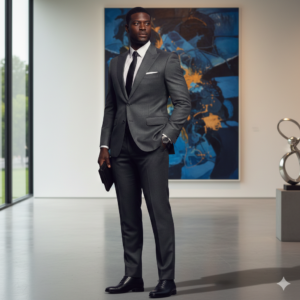
Jacket Fit: A classic or traditional fit is often best. Look for single-breasted, two-button jackets that have a good drape without being baggy. The jacket should comfortably button without pulling or creasing. Avoid overly structured or padded shoulders, as your natural build already provides width. The jacket length should hit just below the rear.
-
Lapels: Wider lapels (but not excessively so) can help balance out your broader frame. Peak lapels can also be very flattering as they draw the eye upwards and outwards.
-
Trousers: Pleated trousers can offer more comfort and drape for a broader build. If you prefer flat-front, ensure they are a comfort fit – not too tight in the waist or thighs. A classic straight-leg cut will look balanced. A medium break on the trousers is usually best.
-
Colors & Patterns: Darker, solid colors like charcoal, navy, or black are inherently slimming. Subtle pinstripes or vertical patterns can also help create a longer, leaner line. Avoid large, bold patterns that can add visual volume.
-
Vents: Double vents on the back of the jacket are preferable as they allow for better movement and a cleaner drape when seated, preventing the jacket from bunching.
 `
`
4. The Shorter Build: Creating an Elongated Look
For men of shorter stature, the primary objective is to create the illusion of height and a more elongated silhouette. Proportion is key to looking sharp and confident.
What you should Consider:
-
Jacket Fit: A single-breasted, two-button jacket is often the most flattering as it creates a deeper V-shape, drawing the eye upwards. Ensure the jacket is slightly shorter than average, hitting higher on the rear to make your legs appear longer. Avoid double-breasted jackets, which can overwhelm a shorter frame.
-
Lapels: Slim to medium-width lapels work best. Avoid wide lapels, which can make your torso appear wider and shorter.
-
Trousers: Flat-front, slim-fit trousers are ideal. They should have little to no break to maintain a clean, unbroken vertical line. Cuffs can sometimes shorten the leg line visually, so consider going without them. High-waisted trousers can also help to elongate the legs.
-
Patterns & Colors: Solid, darker colors and subtle vertical stripes (like pinstripes) are excellent choices as they create a lengthening effect. Avoid large, bold patterns or contrasting colors that can visually chop up your body.
-
Monochromatic Schemes: Wearing a suit, shirt, and tie in similar color families can create an unbroken vertical line, enhancing the illusion of height.

. `
General Tips for Every Body Type .The Importance of Tailoring
While these guidelines are a fantastic starting point, the ultimate secret weapon for any body type is tailoring. An off-the-rack suit can only get you so far. A skilled tailor can make subtle adjustments that transform an ordinary suit into an extraordinary one.
-
Jacket Sleeves: Should end just above your wrist bone, allowing about a quarter to half-inch of your shirt cuff to show.
-
Jacket Length: Should cover your rear and break at the top of your thumb when your arms are relaxed at your sides. (Adjust for shorter builds as noted above).
-
Trouser Waist: Should sit comfortably on your natural waist, allowing for two fingers to fit inside.
-
Trouser Length: This is crucial. Aim for a “no break,” “slight break,” or “medium break” depending on your preference and body type . Avoid excessive fabric bunching at the ankles.
-
Shoulders: This is the hardest part to alter significantly, so prioritize getting the shoulder fit right when purchasing. The shoulder seam should align perfectly with the end of your natural shoulder.